Step Back in Time at Bluemont Junction — Arlington’s Hidden Railroad History
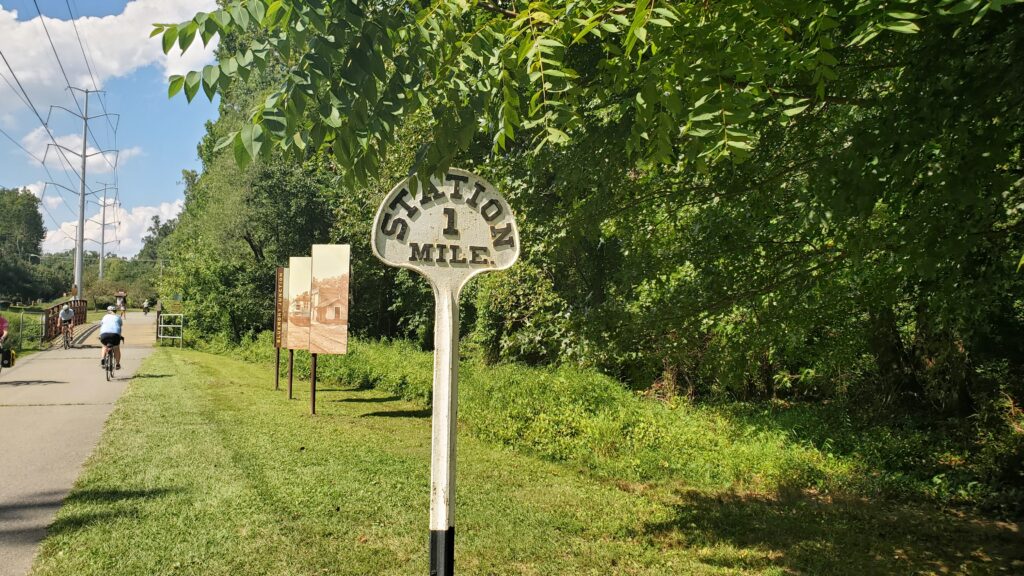
At the intersection of the W&OD Trail and Four Mile Run Trail in the Bluemont neighborhood, a bright red caboose sits beside a cluster of historical markers that most trail users pedal past without stopping — and that’s a genuine loss. Bluemont Junction was once the hub of the multi-line Washington and Old Dominion Railway, serving as a transfer point for passengers and freight traveling between Alexandria, Georgetown, Great Falls, and the resort towns of western Loudoun County — with trains running through the junction every 10 to 20 minutes at the height of its operation between 1912 and the 1920s . Passenger service ended in 1951 and the railroad was fully abandoned in 1968 — replaced, remarkably, by the trails that runners and cyclists now use daily without knowing they’re traveling the same corridors.
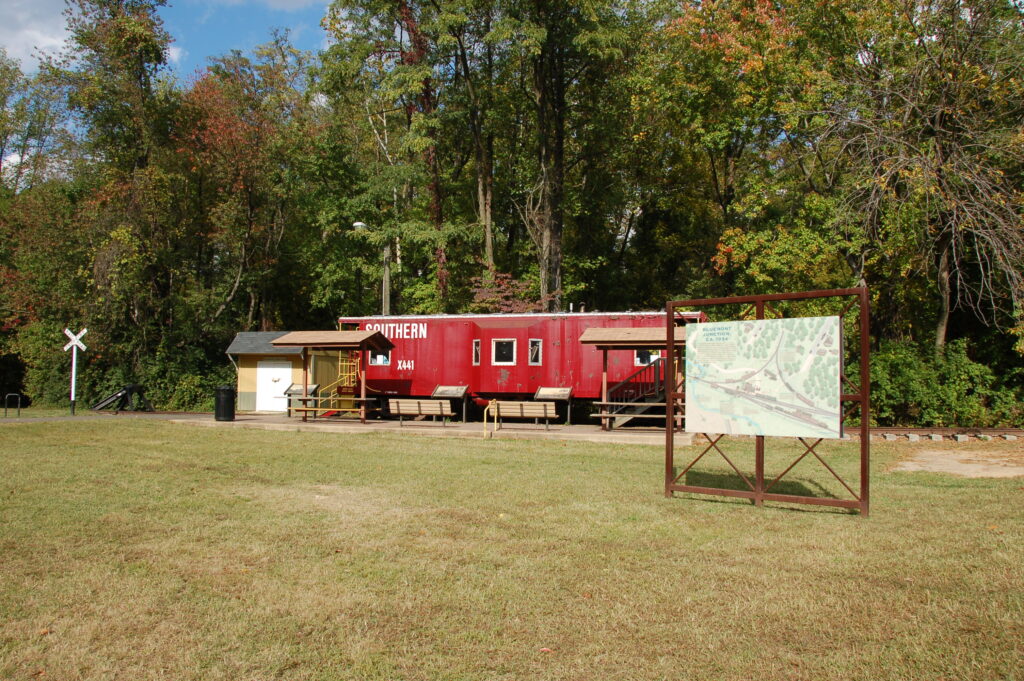
The caboose on display at the junction is Southern Railway bay window caboose Number X441, built in 1971 and donated to Arlington County after the federal government allowed railroads to operate without cabooses . It now serves as a small museum open on summer weekends — Saturdays 11 a.m. to 5 p.m. and Sundays 1 to 5 p.m. — alongside a replica of the original Bluemont passenger shelter and a series of interpretive panels including a detailed map of the junction as it once appeared. The surrounding Bluemont Junction Trail — 1.2 paved miles connecting Ballston to the W&OD — traces the actual railbed of the original line, making every step or pedal stroke a quiet act of historical retracing. Park near Bluemont Park at 601 N. Manchester Street; the junction itself is at the trail intersection near Four Mile Run.